essay
You Opened a Dance School to Create Harmony — Not to Constantly Mediate Scheduling Conflict
May 7, 2026
Dance class scheduling chaos exhausting your studio? Learn how to automate waitlists, recurring dance attendance and fair class allocation without constant conflict and emotional tension. Try it free for up to 30 days.
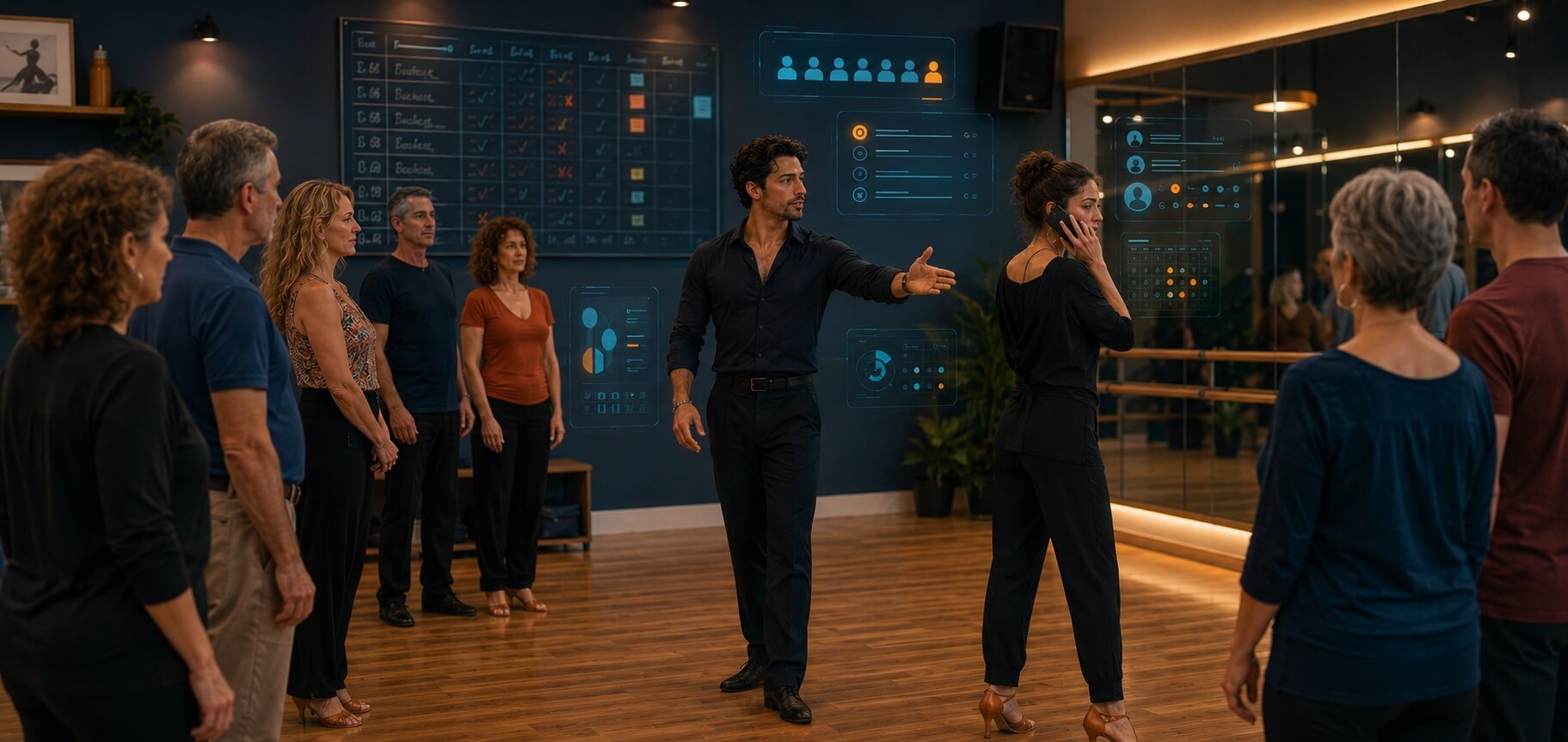
Most dance teachers do not build studios because they enjoy administration.
They build emotional spaces.
Movement.
Connection.
Flow.
A place where people can feel safe, expressive and connected to each other.
But eventually operational tension appears.
Classes overfill. Recurring students compete for spots. Waitlists become emotionally sensitive. Cancellations create frustration. Recurring attendance becomes difficult to balance fairly.
Very quickly:
- dance class scheduling chaos
- recurring dance group balancing
- balancing recurring dance attendance
stop being organizational details and start emotionally draining the person trying to hold the community together.
And for many dance teachers, interpersonal tension is far more exhausting than the administration itself.
You can test Bookcessful completely free for up to 30 days: https://bookcessful.com/en/create-event
Dance Schools Depend on Emotional Atmosphere
Dance communities rely heavily on emotional stability.
Especially because recurring classes often involve:
- long-term recurring groups
- emotional vulnerability
- visible group dynamics
- strong interpersonal sensitivity
- community-based motivation
This is exactly why:
- dance class scheduling chaos
- recurring choreography group scheduling
- balancing recurring dance attendance
become emotionally difficult surprisingly quickly.
Without clear scheduling structure:
- students quietly build resentment
- waitlists feel emotionally unfair
- teachers feel pressured to avoid conflict
- community harmony slowly weakens
This is why many schools increasingly search for:
- dance school scheduling automation
- dance studio waitlist management
- fair access to limited dance class spots
instead of manually negotiating recurring attendance every week.
You can explore recurring dance workflows completely free for up to 30 days: https://bookcessful.com/en/pricing
Dance Studio Waitlist Management
Dance studios often operate with emotionally sensitive capacity limits.
Because:
- studio space is limited
- group size affects choreography quality
- teachers need emotional connection with participants
- partner balance often matters operationally
This makes dance studio waitlist management critically important.
Without transparent scheduling logic:
- students feel excluded
- waitlists become emotionally tense
- last-minute spots remain unused
- teachers manually negotiate attendance constantly
This creates growing pressure around:
- dance workshop booking conflicts
- fair access to limited dance class spots
- dance studio waitlist management
because recurring dance communities depend heavily on emotional fairness and group trust.
And many dance teachers would rather absorb stress personally than openly disappoint students.
You can test recurring waitlist workflows completely free for 30 days: https://bookcessful.com/en/register
Recurring Dance Group Balancing
One of the hardest operational challenges inside dance schools is recurring dance group balancing.
Because recurring attendance naturally becomes uneven over time.
Some groups overload. Others weaken. Partner dynamics shift. Choreography progression becomes inconsistent.
Without balancing logic:
- group harmony weakens
- students become frustrated silently
- teachers avoid difficult allocation decisions
- community tension slowly accumulates
This creates major operational pressure around:
- recurring choreography group scheduling
- balancing recurring dance attendance
- recurring dance group balancing
because recurring dance environments require emotional as well as operational balance.
This is exactly why many studios increasingly implement:
- recurring ballet class allocation
- dance school scheduling automation
- fair access to limited dance class spots
instead of relying on emotionally exhausting manual coordination.
You can explore recurring balancing workflows completely free: https://bookcessful.com/en/create-event
Handling Cancellations in Dance Classes
Recurring cancellations create disproportionate instability inside dance schools.
Especially because choreography progression often depends heavily on:
- consistent attendance
- partner continuity
- group synchronization
- stable recurring participation
- balanced recurring formations
This is why handling cancellations in dance classes becomes emotionally exhausting very quickly.
Without automation:
- groups suddenly become unbalanced
- teachers manually contact students
- waitlists become unpredictable
- emotional tension spreads through the community
This leads directly to:
- dance class scheduling chaos
- handling cancellations in dance classes
- dance workshop booking conflicts
because recurring instability slowly affects both scheduling and emotional atmosphere simultaneously.
This is exactly why more studios increasingly search for:
- balancing recurring dance attendance
- dance school scheduling automation
- recurring ballet class allocation
instead of trying to manually repair recurring scheduling tension every week.
You can test recurring cancellation handling completely free for up to 30 days: https://bookcessful.com/en/pricing
Fair Access to Limited Dance Class Spots
Fairness matters deeply inside dance communities.
Especially because recurring students often develop strong emotional attachment to:
- specific teachers
- specific groups
- specific recurring classes
- specific choreography communities
This is exactly why:
- fair access to limited dance class spots
- recurring ballet class allocation
- dance workshop booking conflicts
become critically important operational concerns.
Without transparent allocation logic:
- students perceive favoritism
- teachers avoid uncomfortable conversations
- community tension becomes passive-aggressive
- group trust slowly erodes
This is why more dance schools increasingly implement:
- recurring dance group balancing
- fair access to limited dance class spots
- dance studio waitlist management
through automation rather than emotionally difficult manual decisions.
You can start building recurring dance workflows completely free right now: https://bookcessful.com/en/register
The Real Goal Is Protecting Harmony
Most dance schools initially think they need:
- a booking calendar
- a waitlist feature
- a recurring class schedule
But recurring dance communities actually require:
- stable recurring allocation
- emotionally transparent scheduling
- balanced recurring attendance
- fair recurring access
- reduced interpersonal tension
This is why:
- dance class scheduling chaos
- handling cancellations in dance classes
- recurring choreography group scheduling
have become increasingly important operational topics inside growing dance schools.
Because dance communities rarely fail from lack of passion.
They fail when recurring operational tension slowly destroys the emotional harmony that originally made people want to belong there.
And yes — you can test the entire recurring workflow completely free for up to 30 days before making any commitment:
Comments
Comments are shown after moderation, similar to a classic public blog.
0 comments
There are no approved comments yet.